Luxembourg’s SMC marked 50 years of press aid with a conference on media pluralism and digital-age challenges. Speakers discussed funding, AI, independent journalism and fair relations between media and platforms, stressing the need to balance innovation, media viability and pluralism.
Nordic and Baltic ministers adopted a declaration to strengthen regional digital sovereignty by 2030, including through cooperation on cloud procurement, submarine-cable security and shared infrastructure projects. Estonia, Latvia and Lithuania were invited to join the New Nordics AI platform.
Estonia approved rules for about €60 million in EEA and Norway grants for environmental projects, public health and crisis readiness. The crisis programme includes analysing AI tools for Emergency Response Centre workflows, warning systems, bomb-disposal equipment and offshore-wind accident preparedness.
Canada’s backgrounder lists 44 companies awarded $66 million on 12 May 2026 through the AI Compute Access Fund. Projects include AI for cybersecurity, wildfire monitoring and agriculture, supported by access to computing resources for Canadian AI development.
Canada’s backgrounder details more than $52 million for 45 AI Compute Access Fund recipients announced on 26 November. Projects cover applications including cybersecurity, energy and health, using computing support to develop and scale Canadian AI.
Canada is increasing the AI Compute Access Fund by $700 million to $1 billion, prioritizing Canadian-owned computing capacity and launching a health and life sciences proposal call; more than $52 million has been allocated to 45 companies.
Moldova and Latvia discussed EU accession, investment and airport modernization. Talks highlighted Latvian company TILDE’s role in founding Moldova AI Hub and TET’s plans for a Moldovan data centre.
China has led the development of 78 international AI standards, including foundational and sector-specific standards. The SAMR also said China and other countries jointly developed what it described as the first international standards proposal focused on managing generative AI risks.
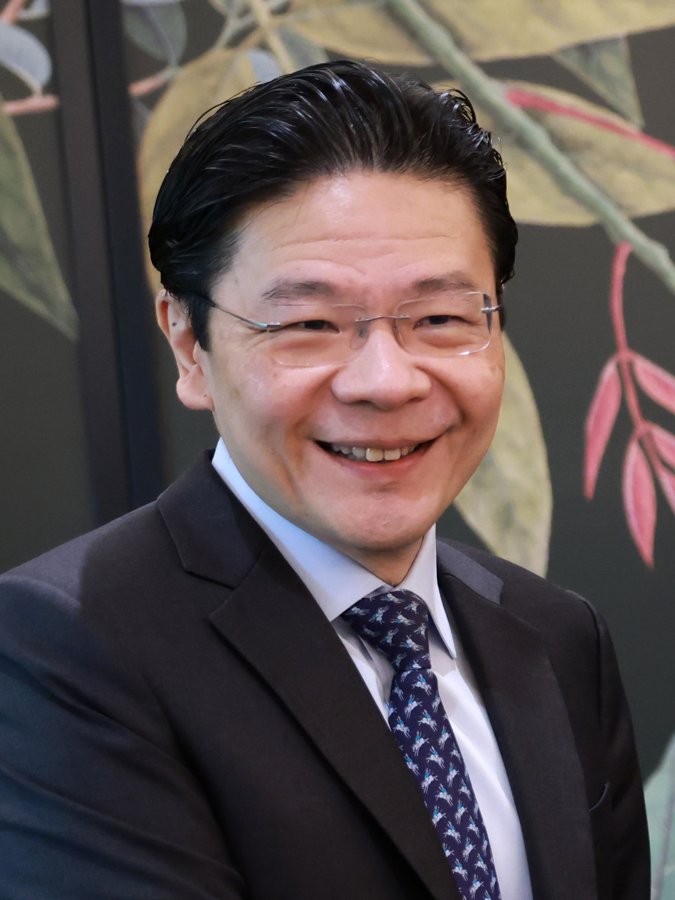
Ding Xuexiang and Lee Hsien Loong discussed expanding China-Singapore cooperation, building on recent bilateral meetings and leaders’ exchanges. They emphasized sustained communication, new areas of cooperation, and practical results, including potential collaboration on artificial intelligence.
Wang Yi and Ignazio Cassis co-chaired the fifth China-Switzerland Foreign Ministers’ Strategic Dialogue in Nanjing. They discussed political trust, trade, AI, climate change and cooperation, and agreed to deepen bilateral ties and support the UN-centered international system and international law.
Malta supported the EU Culture Work Plan for 2027–2030, securing a reference to underwater cultural heritage. The meeting also addressed AI’s effects on creative sectors and a proposal to strengthen children’s protection online.
Malta’s delegation discussed military AI and cybersecurity at NATO’s Parliamentary Assembly and highlighted Malta’s decision to legislate on deepfakes. It also joined sessions on terrorism, deterrence and protection of undersea infrastructure.
Chinese Vice Premier Ding Xuexiang and Singaporean Prime Minister Lawrence Wong discussed deepening bilateral cooperation, including in AI, green development and the digital economy, and strengthening people-to-people ties. Wong said Singapore would use its upcoming ASEAN chairmanship to advance cooperation between ASEAN and China.
China and Singapore agreed to strengthen cooperation in established and emerging fields, including technology, AI, the digital economy, green industries and connectivity. Their leaders’ meetings also produced 29 outcomes across emerging sectors, finance, health and other areas.
At COP31 in Antalya, Luxembourg and the EU advocated stronger science-based commitments, including phasing out fossil fuels, but the main decision omitted them. Luxembourg announced a national phase-out roadmap, held meetings and events, launched an AI-supported funding marketplace, and supported youth engagement.
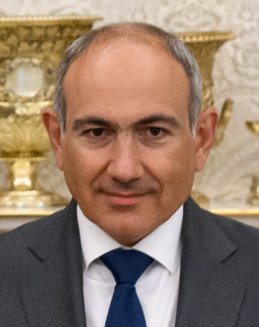
At DigiTec 2026, Prime Minister Pashinyan discussed plans to develop Armenia as an AI hub, attract investment, build infrastructure, and support AI adoption without replacing workers. He also outlined renewable-energy and regional electricity-link initiatives tied to the “Crossroads of Peace” and TRIPP programs.
The Ministry for Equality and Civil Rights and the University of Malta signed an agreement establishing an expert group on artificial intelligence and racial equality. It will support research, guidance, training and policy recommendations to identify AI bias, protect rights and ensure technology benefits everyone.
Kazakhstan climbed to 16th in the UN E-Government Development Index, entering its highest category for the first time. The communication cites consistent policy, integrated digital services, AI adoption, stronger connectivity, skills and legal frameworks, and designates 2026 the Year of Digitalization and Artificial Intelligence.
At the EU Culture Council, Germany and 14 other Member States called for stronger copyright protections in the AI era. Ministers discussed online child safety and European media policy, adopted the 2027–2030 cultural work plan, and Weimer urged European ownership of TikTok’s European operations.
Prime Minister Kristen Michal’s Silicon Valley visit covered opportunities for Estonian technology firms, AI skills and development, cybersecurity, and European security. He met researchers, business leaders, and officials, promoted Estonia’s AI goals, and discussed support for Ukraine and a just, lasting peace.
Xi Jinping and Prabowo Subianto announced negotiations on a bilateral comprehensive economic partnership. Xi urged stronger strategic ties and expanded cooperation in major infrastructure, energy, minerals, AI, the digital economy, and clean energy.
Wang Yi said APEC endorsed a statement aligning AI and emerging-technology cooperation with employment, public services and digital infrastructure. He also highlighted the Shenzhen Outlook, stronger regional supply-chain connectivity and China’s proposed institutions and funding.
Xi and Wong discussed closer China-Singapore ties, including trade agreement negotiations, Belt and Road cooperation, and collaboration in digital technology, green development and AI. Wong reaffirmed Singapore’s one-China policy and called for cooperation on international affairs and global challenges.
Li Qiang and Anthony Albanese discussed expanding China-Australia trade and cooperation in clean energy, electric vehicles and AI while managing differences. They called for greater cultural exchanges and multilateral coordination and noted the upcoming 55th anniversary of diplomatic ties and Year of Tourism.
United States · Archive image for country context. Kurt Kaiser · CC0
The White House recaps President Trump’s Fox News interview from Shenzhen, covering U.S.–China relations, air-traffic-control modernization, technology outages, Iran, cooperation with Democrats, Super Intelligence, and claims that Obama brought Russia and China closer.
At the APEC leaders’ meeting in Shenzhen, Xi urged wider AI use and digital infrastructure investment, stronger trade and connectivity, and cooperation on energy, food security and a green transition.
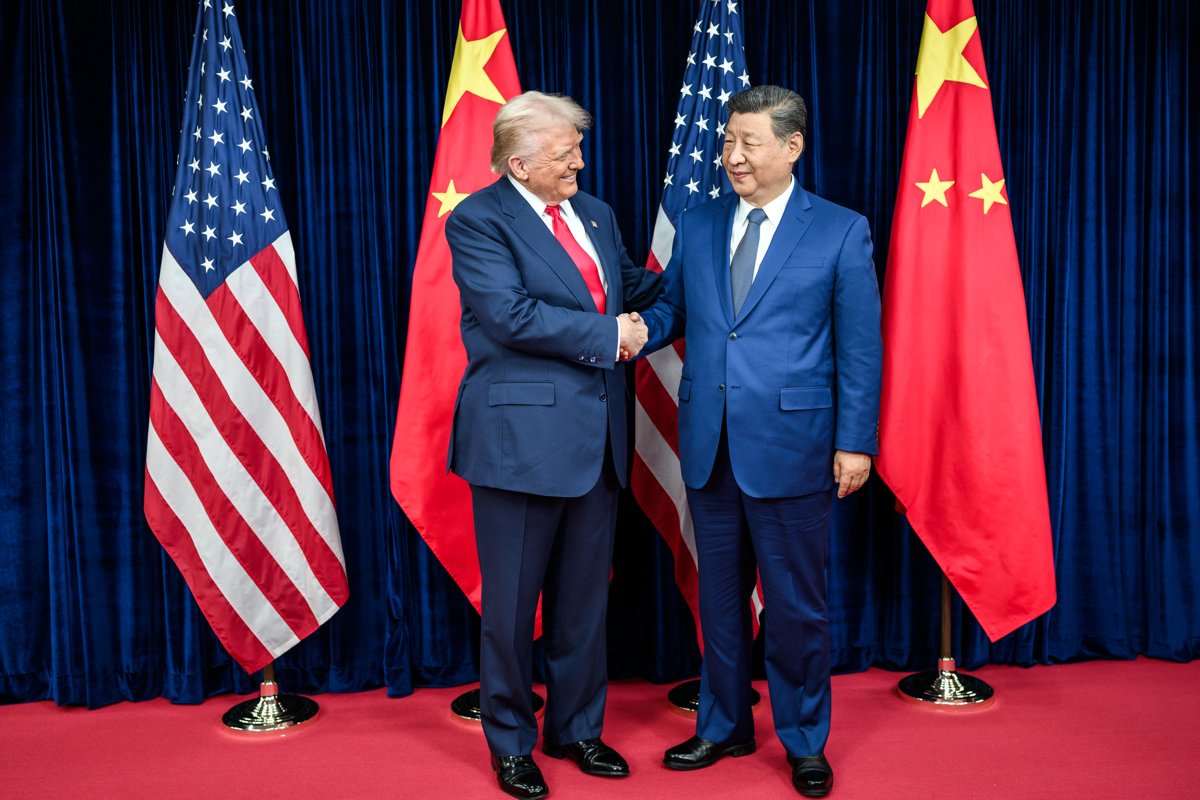
Xi and Trump met in Shenzhen and called for maintaining stable bilateral ties, implementing their leaders’ consensus, and expanding cooperation. Xi raised trade, counternarcotics, AI safety and Taiwan; Trump said the United States does not support Taiwan independence.
At the APEC leaders’ meeting in Shenzhen, Xi called for deeper trade ties, connected supply chains and a digital innovation pillar that would encourage wider AI use. China pledged $20 million for APEC cooperation and proposed a Shenzhen research center.
The UK plans a £260 million package for Ukraine, including more than 1,000 long-range strike drones and other systems; over 80% of the funding will be spent domestically. Twelve UK defence firms will also gain access to Ukraine’s Avengers AI Labs.
Luxembourg’s Ministry of the Economy announced €15 million in funding for business-led RDI projects in industry and mobility. Selected projects by eight companies will develop technologies including AI, smart sensors, autonomous driving and industrial modelling, starting in late 2026 or early 2027.
In an economic-policy speech, Deputy Minister Pavlos Marinakis said AI and digital transformation could help Greek firms raise productivity, cut costs and reduce bureaucracy, with smaller firms sharing the benefits. He also called energy security, infrastructure and reliable supply chains strategic for competitiveness.
Quad leaders backed an accelerator to coordinate and fund access, deployment and technical assistance for trusted “Super Intelligence” across the Indo-Pacific. The release explains that Australia, India and Japan use the term for AI. They also announced maritime-surveillance, cyber, cable and energy-connectivity initiatives.
Li Qiang urged closer China-ASEAN coordination to advance peace, prosperity and public welfare, highlighting trade, investment, connectivity, energy and AI cooperation. He also proposed scholarships, professional training and stronger law enforcement ties, and called for dialogue and an early South China Sea Code of Conduct.
The Prime Minister announced a Makerfield Test prioritising less well-off communities, urged values-based foreign policy and stronger international ties, proposed practical UK-EU changes, and called for UK-led global AI safeguards.
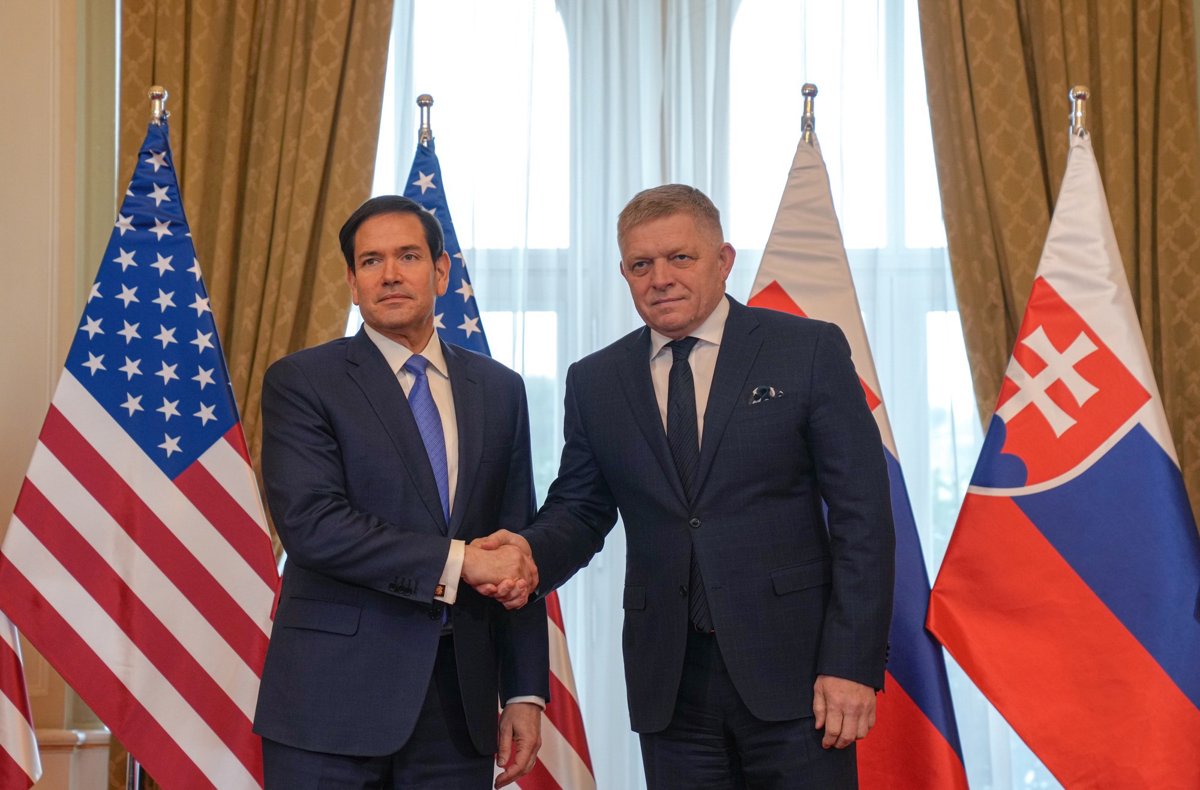
After the Dublin summit, Robert Fico welcomed plans for an EU delegation to join talks with Ukraine, Russia and the United States, while noting agreement would be difficult. Leaders also discussed strict AI regulation and potential applications in several sectors.
Malta’s National Audit Office met with a Spanish Court of Audit delegation to discuss existing and potential cooperation, including peer learning, digitalisation, artificial intelligence and climate change oversight. Both institutions reaffirmed their strong relationship and commitment to continued collaboration and knowledge exchange.
At the China–ASEAN summit, Li urged an early South China Sea code, closer supply-chain ties and a 2027 AI cooperation year. China said it was ready to work with ASEAN on AI+ cooperation; the upgraded free-trade protocol takes effect December 1.
Prime Minister Kristen Michal is visiting Silicon Valley to promote cooperation and investment in AI, data-centre infrastructure and related technologies. His programme includes a technology conference, meetings with industry and political figures, a Stanford University discussion, and a meeting with the Estonian community.
At an informal European leaders’ summit in Dublin, Robert Abela welcomed plans for the E5 countries and EU institutions to represent the EU in future Russia–Ukraine peace talks. Leaders also discussed AI, with Abela outlining Malta’s strategy, public training and the need to update policies.
At the Dublin European Council meeting, Estonia’s Prime Minister urged leaders to focus on supporting Ukraine rather than discussing changes to Europe’s security arrangements, and announced €6.5 million in additional aid. Leaders also discussed strengthening Europe’s AI sector, investment and oversight of powerful models.
Andorra’s foreign minister attended the Francophonie ministerial conference in Phnom Penh, advocating multilingualism, peace and AI cooperation and meeting Senegalese and Kosovan counterparts. Head of Government Xavier Espot will represent Andorra at the summit, which is expected to adopt declarations on cooperation, crises and peacebuilding.
Spain is preparing to host the 30th Ibero-American Summit in Madrid in November 2026. Regional initiatives cover AI, disaster response, environmental sustainability, care policy, academic mobility and cooperation planning from 2027, with new networks, charters, agendas and strategies.
At the informal Dublin EU summit, Chancellor Stocker called for a reduced financial framework that safeguards Austrian interests, stronger EU competitiveness in AI, and meaningful European involvement in Ukraine’s funding and peace efforts.
The UK and Azerbaijan agreed to exchange expertise on AI, digital governance and innovation under a new strategic partnership. The declaration also covers security, trade, energy and regional peace.
Spain’s equality minister and gender-violence delegate presented a campaign warning that AI-generated sexual deepfakes are a form of gender-based digital violence. The campaign highlights the non-consensual use and rapid spread of women’s images, and calls for social awareness and responsibility.
The Government established a 48-member AI and Digitalisation Council, outlined deficit-management preparations for the 2027–2028 budgets, and approved a draft law on access to cash and payment services. It also adopted a burial-area decree and made several public-sector appointments.
The Government agenda includes draft legislation on industrial emissions, repair rights, disability and parking cards, drinking water, permits, VAT, traffic rules and background checks, alongside AI codes, funding and reserve proposals, digital governance, EU housing objections and an EU–US information-sharing framework.
Jan Černocký of Brno University of Technology received the 2026 Czech Head Government Award, including CZK 1 million, for his lifetime research contributions to speech technologies and AI. He credited his research group and university, and discussed the group’s work and applications.
At COP31, Kazakhstan said it is introducing AI and space monitoring to forecast natural hazards and prevent emergencies. Prime Minister Bektenov also presented climate and energy projects and international cooperation proposals.
Estonia’s youth council says students favor moderate social-media limits. Workshops identified AI misuse, misinformation and online scams among digital risks; the council will publish recommendations in December.
Prime Minister Kristen Michal will attend European meetings in Ireland, advocating continued support for Ukraine, pressure on Russia, and a common EU position. Discussions will also address European AI capabilities, safe use, investment, energy, and funding Ukraine’s needs next year.
Prime Minister Mette Frederiksen is travelling to Dublin for the ninth EPC meeting, where defence, security and hybrid threats are in focus. She will co-moderate a discussion on defending democratic Europe. Her Ireland visit also includes an informal European Council meeting focused on artificial intelligence.
G7 foreign ministers and the EU High Representative reaffirmed support for Ukraine and called for ceasefires, civilian protection, humanitarian access and diplomacy across multiple conflicts. They addressed sanctions, maritime and hybrid threats, regional security, food security, AI, economic coercion and resilient critical-mineral supply chains.
The message honors workers who build and protect U.S. infrastructure and outlines an America First resilience agenda: strengthen domestic supply chains and energy production, modernize infrastructure, expand AI data centers while protecting ratepayers, and improve readiness for crises.
Prime Minister Vasile Tofan and World Bank official Michel Kerf discussed AI and other technology applications, digitalization and resilience funding, and potential cyber-resilience projects. Tofan invited partners to propose sectors for AI deployment and test innovative services in Moldova.
Prime Minister Vasile Tofan and World Bank regional director Michel Kerf discussed AI and other technologies to boost productivity, potential project financing, and opportunities to pilot innovations in Moldova. Kerf also expressed openness to considering support for cyber-resilience projects.
At Eurogroup and ECOFIN meetings, Luxembourg’s finance minister discussed AI’s effects on banking and ways to strengthen financial resilience. Ministers also considered European security, Ukraine and EU legislation.
The Cabinet agenda covers fuel-price impacts on public transport, Estonia–US memorandum negotiations, support for Estonian candidates for senior international roles, AI agent codes and healthcare, electricity-price support for large consumers, tobacco legislation, and use of earmarked Government reserve funds.
Andorra Business awarded €1 million to 10 of 30 applicant local R&D projects across sectors including health, construction, water monitoring, sports technology, drones, retail analytics, language AI and cosmetics, supporting skilled jobs and products and services for wider markets.
The White House recaps President Trump’s 60 Minutes interview after the midterm elections, quoting his remarks on economic performance, elections, border security, Iran, energy, investment, artificial intelligence, and other topics, alongside statistics and claims supporting his record.
The Prime Minister discussed AI cooperation with President Macron, highlighting AI’s potential benefits and risks, the UK’s expertise through its AI Security Institute, and plans to prioritise AI and international standards during the UK’s 2027 G20 Presidency.
Moldova hosted the first Digital Connectivity Platform meeting, where leaders discussed secure digital infrastructure, cybersecurity, AI and regional cooperation. Announced initiatives include EU-funded Wi-Fi access in at least 30 localities and preparation of a secure, resilient data centre project.
The Czech Government approved a CZK 68.62 billion healthcare investment plan for 2028–2034, established an AI council and approved the Prime Minister’s mandate for an informal EU leaders’ meeting in Dublin. It also discussed energy, legal, infrastructure, healthcare digitalisation, agricultural subsidies and audit findings.
The Dutch government approved a national AI vision focused on responsible adoption, access to advanced technology and security, and safeguarding public values. It plans to support AI businesses and infrastructure, reduce dependence and risks, help organizations apply EU rules, and involve citizens in 2027–2028.
Kazakhstan announced an $810 million copper-foil plant planned to make material for batteries and circuit boards used in AI servers and data centres. Production is expected to begin in 2029.
Prime Minister Bektenov reviewed Pavlodar's Data Processing Centers Valley, including a 164 MW Firebird AI data centre under construction. Its first phase totals 304 MW across three centres. Officials were told to expand computing and power infrastructure and meet commissioning deadlines.
Prime Minister Rumen Radev presented the 2027 budget, highlighting a nearly 100% increase in science funding and initiatives in AI, robotics, energy, space and connectivity. He said the measures aim to modernise Bulgaria’s economy, encourage domestic investment and attract strategic foreign investors.
Austria and Estonia signed an MoU to cooperate on secure data exchange, Once-Only services, cross-border administration and business wallets. The partnership will support digital sovereignty and public-sector innovation, with Austria aiming to expand its dadeX infrastructure and strengthen its use of AI.
At DOKU.TECH 2026, Prime Minister Albin Kurti highlighted Kosovo’s growing ICT sector and digital services, urging responsible AI, investment in skills, locally developed high-value technology, and cooperation among institutions, businesses, universities, and the diaspora to create opportunities for young people.
Prime Minister Olzhas Bektenov reviewed grid and generation projects, energy-system preparations, and digital modernization. He instructed officials to update the national energy balance by September next year and strengthen oversight of investment-project schedules. KEGOC reported efficiency gains from AI, automation, and synchrophasor systems.
Estonia called for European AI investment to avoid falling behind the United States and China, alongside AI skills training. Ministers also backed restrictions on Russian and Belarusian participation in international sport during Russia’s war against Ukraine.
Prime Minister Kristen Michal called on Europe to develop its own AI capabilities and infrastructure through investment and cooperation. He outlined Estonia’s workforce training, practical AI use and safety rules for AI agents, and announced support for an international appeal to oversee frontier AI systems.
At the Lancang–Mekong foreign ministers’ meeting, China called for expanded AI and digital-economy cooperation and invited more Mekong countries to join the World Artificial Intelligence Cooperation Organization. The wider agenda covered connectivity, water, security and disaster response.
Andorra’s 2nd Research Week, held from 16 to 21 November, features sixteen activities organised with ten institutions. Its programme covers natural hazards, AI, health, public policy and biodiversity through debates, workshops, lectures and field activities.
At the Ibero-American Summit, Andorra highlighted the launch of a regional AI alliance alongside disaster-risk cooperation, digital equity and support for Ukraine. It will chair the disaster-risk network in 2027.
Umbra and CERT-IS have received assessed access to OpenAI’s cybersecurity model through GTAC. They will explore its use for defensive tasks under specialist oversight, strict security requirements, and authorization limits.
Croatia's Justice Minister proposed Criminal Code changes addressing online harassment and the non-consensual sharing of sexual deepfakes created with AI. The wider package also covers cyberstalking, explicit-image sharing and a separate law to protect minors online.
Ibero-American ministers agreed in Madrid to establish a voluntary AI Alliance focused on data cooperation, regionally relevant models and computing access, while advancing the digital rights charter and discussing digital rights, child protection, connectivity, cybersecurity and digital government.
Spain’s digital transformation minister opened the Ibero-American Digital Forum in Madrid. Participants discussed digital rights, cybersecurity, connectivity, digital government and AI, emphasizing regional cooperation and sovereign, ethical, trustworthy AI rooted in Ibero-American languages, data and priorities.
The National Security Council discussed NATO planning, Bundeswehr expansion, space security, crisis-response capacity and AI safety, intelligence-law rules, and recent violent disturbances. It agreed to strengthen space security through research and development, review post-service activity rules, and thanked emergency responders.
Minister Evan Solomon concluded a Germany visit focused on strengthening Canada’s AI partnerships. At the 2026 Digital Summit and meetings with European officials and technology firms, he discussed AI sovereignty, safety, standards, investment, innovation, and collaboration through the Canada–Germany Sovereign Technology Alliance.
Andorra’s foreign affairs minister opened a Council of Europe conference on intercultural dialogue, education and inclusive AI. Speakers highlighted AI’s opportunities and risks, unequal access, and education’s role in fostering critical, responsible use grounded in human rights and democratic values.
Iceland’s Ministry of Culture, Innovation and Higher Education will support Netvís for three years, providing an additional ISK 20 million annually alongside EU funding to expand education and prevention on AI and media literacy, online safety, and risks affecting children and young people.
Greece’s cabinet considered a bill setting rules for AI use in the labour market and protections for platform workers. It also reviewed defence, policing, emergency-service and investment measures.
At the World Forum for Democracy, Croatia’s prime minister warned that AI can aid innovation but, without safeguards, can enable manipulation and threaten human rights. He also discussed Ukraine and democratic security.
At COP17, Luxembourg promoted biodiversity finance, including an AI-based platform designed to attract capital to projects benefiting climate, biodiversity and communities. Delegates also reviewed lagging progress toward 2030 nature goals.
The Dutch government supports the EU Kids Act’s safety rules for social media, games and AI chatbots, while seeking closer scrutiny of children’s rights, privacy and reliance on parental monitoring.
Minister Silvio Schembri outlined ten initiatives aligned with Malta Vision 2050, including tax relief for small firms, funding for digitalisation and AI, business support, bureaucracy reduction, investment in innovative sectors, an industrial policy, and a study of possible land reclamation near the Freeport.
WHO’s Regional Committee for Europe selected Luxembourg to host a geographically dispersed office focused on AI in health. The office will support Member States in adopting safe, ethical and trustworthy AI, complement Luxembourg’s national initiatives, and foster training, research and international cooperation.
At a UN Security Council debate, Deputy Foreign Minister Totladze linked AI, modern monitoring and unmanned technologies to maritime security. She urged safeguards, oversight and accountability while citing threats from Russia's occupation of Georgian regions and war against Ukraine.
The Federal Council reviewed progress implementing the Council of Europe AI Convention, including federal-sector measures and voluntary AI-code guidance. It tasked OFCOM with coordinating further work through March 2028. Legally binding measures covering transparency, data protection, non-discrimination, oversight and risk assessment are planned for consultation…
Minister Martine Deprez attended the WHO European Regional Committee’s 76th session in Copenhagen. Luxembourg highlighted the need for international cooperation, clear WHO priorities, preserved expertise and sustainable workloads, less fragmented global health governance, responsible health AI, and stronger primary health care.
Estonia's cabinet agenda sets out its position on EU cloud and AI regulation: expand European computing capacity, define public-cloud trust levels, strengthen critical-sector security and reduce reliance on providers outside the EU. The agenda also covers domestic and foreign policy.
Austria proposed a UN-backed AI cooperation centre in Vienna. Geoffrey Hinton welcomed the initiative, while Chancellor Christian Stocker and State Secretary Alexander Pröll discussed AI safety, talent and innovation with Hinton and Austrian developer Peter Steinberger. Austria plans further discussions with international partners.
Nordic prime ministers agreed to protect children amid social media, smart devices and AI, discussing age limits and phone-free schools. They also addressed regional security and Nordic cooperation.
Austria proposed tiered privacy rules for smart glasses with cameras, microphones and AI functions. The plan would bar use in sensitive places and require visible recording indicators in public.
Andorra will host the Council of Europe's North-South Centre conference on intercultural dialogue and AI, focusing on education for democratic, inclusive digital societies. The event will foster dialogue among Europe, Africa, and the Middle East, addressing AI's opportunities, challenges, and governance in a human rights…
The Netherlands aims to become Europe's leading medical technology sector by 2035 through a €102.5 million government and €200 million private-public investment. The MedTech 2035 policy focuses on AI, robotics, and collaboration to advance healthcare innovation, economic growth, and system resilience.
Prime Minister Plenković highlighted challenges due to the EU's complex relations with China, Russia, and the USA, affecting competitiveness and labor markets. Croatia is experiencing solid growth and aims to invest in economic competitiveness, AI, and skill development while maintaining social cohesion and fiscal responsibility.…
At the Xiong’an forum, Wang Yi called for China–U.S. cooperation on AI governance, risk management and shared rules, and international cooperation to reform global governance. Thornton and Friedman welcomed closer bilateral AI cooperation and China’s role at the upcoming APEC meeting.
The UK and Oman agreed to deepen cooperation on AI, data centres, critical minerals and space through exchanges and technical meetings. Their wider partnership also covers defence, green industries and regional stability.
The German government and Google.org support the Global Authentic Memory Initiative (GAMI) to protect historical digital archives from AI-generated falsifications. Through cryptographic verification, GAMI ensures document authenticity, combating disinformation and preserving trust in historical records for future generations.
The UK government is investing in aerial firefighting, specialist equipment, landscape restoration, and AI to strengthen wildfire response and prevention. A new Wildfire Action Plan and cross-government coordination aim to enhance resilience amid growing climate risks, supported by industry partnerships and funding.
Sweden's government authorized the Tax Agency to join a EuroHPC agreement to establish EU AI gigafactories. This cooperation with Finland aims to enhance Sweden's and the EU's digital sovereignty by providing access to advanced computing power for public sector and research use.
Minister Jonathan Attard chaired a meeting with civil society to discuss Identità Agency's 2027-2032 strategy, focusing on digitalisation, AI, efficiency, and security. Stakeholders shared input to enhance services, reduce bureaucracy, and safeguard identity and data protection in the Agency’s future plans.
China says it is developing AI-assisted emergency response equipment as part of a wider effort to improve disaster research, prevention and mine safety.
PrairiesCan announced an additional $500 million over five years for the Regional Artificial Intelligence Initiative, bringing federal funding to $700 million. In Alberta, Saskatchewan and Manitoba, it supports responsible AI adoption, commercialization and ecosystem organizations. Applications close December 31, 2030, or when funding is committed.
The Government of Canada outlines a $1-billion Venture and Growth Capital Catalyst Initiative starting in 2026–27, alongside a $500-million AI growth fund and other financing measures, to attract private investment, help Canadian firms scale, and strengthen the country’s venture capital ecosystem and economic sovereignty.
Prime Minister Rumen Radev emphasized that a strong economy underpins Bulgaria–USA strategic cooperation. Highlighting successful tech initiatives, growing trade, and upcoming projects like a space park and AI factory, he stressed energy, health innovation, and transparent funding as key collaboration areas.
Prime Minister Radev and Google discussed digital infrastructure projects in Bulgaria. Google granted an additional $1 million to INSAIT, totaling over $7 million in support since 2022, fostering AI research, technology development, and digital transformation to retain talent and boost the economy.
Portugal and China agreed to develop a 2027–2030 education action plan that includes AI-supported cooperation. They also plan talks on recognising higher-education qualifications and designated Portugal guest of honour at China's 2027 education exhibitions.
A survey shows 81% of investors find Malta attractive, with most planning to expand operations. AI is a key growth area. The government commits to digital transformation and economic stability, aiming for innovation-driven growth and improved living standards by 2050.
On 20 October 2026, Luxembourg's Ministry of Labour and digital authorities held a conference on AI-era skills, presenting the NTAC project supporting companies' digital skill development. The event highlighted government efforts to help workers and firms adapt amidst AI-driven labor market changes, emphasizing lifelong learning…
Austria outlined priorities for its 2027–28 UN Security Council term, including upholding international and humanitarian law, civilian protection, regulating AI in weapons, conflict prevention, addressing emerging threats, UN reform and strengthening Vienna’s international role. It also called for an effective, transparent and efficient Council.
Malta's MDIA and AACC signed an agreement to offer AI4ALL courses to older persons, enhancing AI literacy and digital inclusion in care homes and centres. The initiative supports independent, safe, and confident AI use among older adults, with staff training and awareness efforts.
Interim Commissioner Jeanne Pratt outlines the Competition Bureau’s role in fostering competition in Canadian communications through advocacy, regulation and enforcement. She discusses wireless and broadband rivals, market entry and switching, data portability, privacy, AI and satellite connectivity, emphasizing open markets, consumer choice, investment and innovation.
The White House announced a women’s health initiative that calls for using super intelligence to improve understanding of female biology and speed medical discoveries. An executive order also creates a task force and NIH division.
The Dutch government's campaign asks people to pause three seconds before clicking suspicious links. It says criminals use AI and leaked data to make scams more convincing; survey respondents often recognised doubts only after clicking.
Luxembourg's ministers attended the EPSCO meeting on 19 October 2026, approving housing exclusion and equality recommendations. They discussed EU policies on non-discrimination, AI use at work, remote work rights, emphasizing Luxembourg's cross-border workforce and the need for tailored EU frameworks.
Deputy Minister Pavlos Marinakis discussed the decline in news interest linked to toxic public discourse and misinformation. Government measures include media regulation and critical thinking education. He emphasized verifying information, combating falsehoods, addressing rising far-right influence, and responsibly using AI in news dissemination.
Germany’s Economic and Education Ministries and NVIDIA signed a declaration to develop advanced industrial AI models, leveraging Germany’s engineering strengths and integrating into the Platform Industry 4.0. The initiative aims to build a leading industrial AI ecosystem, benefiting research, industry, and SMEs, enhancing competitiveness and…
At a traditional medicine conference in Beijing, Premier Li Qiang called for integrating AI and modern biomedicine with traditional medicine to improve diagnosis and treatment. He also urged international cooperation on chronic and emerging infectious diseases.
Speaker Carmelo Abela called for stronger parliamentary cooperation to combat hybrid threats, develop clear AI policies protecting rights and innovation, and uphold the rule-based international order through parliamentary diplomacy to address global crises and promote peace.
A State Council executive meeting chaired by Premier Li Qiang reviewed progress on the “AI Plus” initiative, approved in principle draft changes to the Teachers Law and Pricing Law for legislative deliberation, and decided to amend 14 administrative regulations and repeal four.
Kazakhstan's Prime Minister held a meeting on digitizing labor and social protection, emphasizing AI and unified digital platforms to ensure targeted social assistance, labor rights enforcement, and transparency. The 'Family Digital Card' integrates data for proactive support, while labor risks are monitored, and reforms improve…
Croatia unveiled its National Plan for AI Development until 2032 with €932 million investment, focusing on innovation, public services, and education. The plan emphasizes ethical AI use with humans central, includes public consultation, and introduces unified evaluation for judicial advisors and updated duty shift compensation…
The Ministry of Education outlines final AI use guidelines for schools from January 2027, promoting responsible, age-appropriate integration that supports learning while safeguarding student autonomy, data privacy, and equity. Five support tools accompany the guidelines, currently under public consultation until finalized later in 2026.
Moldova aims to harness artificial intelligence to boost economic growth, modernize services, and improve governance. Prime Minister Vasile Tofan highlighted AI's potential at Moldova AI Hub, fostering innovation through pilot projects and collaboration among public, business, and academic sectors.
At a health regulation conference, Malta's Deo Debattista said AI and digital tools can support care but cannot replace professional judgment and human empathy. He connected that principle to person-centred services, regulatory quality and Malta's active-ageing work.
The Maltese Government is using European funds to support over 700 SME projects with €45 million, fostering innovation, digitalization, and AI integration to boost productivity and competitiveness. This investment aims to modernize businesses, create jobs, and secure sustainable economic growth for Malta's future.
The Nordic countries, Baltic States, and Ukraine agreed in Tallinn to deepen cooperation on protecting cultural heritage and creative freedom, emphasizing AI's role in supporting linguistic and cultural diversity, safeguarding cultural assets in crises, and promoting knowledge sharing on AI and culture.
Canada’s $50 million food innovation investment will help processors adopt automation, AI and digital manufacturing to strengthen domestic production and supply chains.
The Government of Canada announced up to $571,521 over three years for Céréla Inc. to use AI to accelerate development of high-yielding barley and soybean varieties suited to Eastern Canada, including disease-resistant barley and soybeans without anti-trypsin factors.
Minister Evan Solomon concluded a UK and Ireland visit focused on responsible AI, innovation, digital infrastructure and economic security, renewing Canada–UK AI safety cooperation and discussing standards with partners ahead of the Canada–EU Summit.
The Swiss Federal Council's draft law on communication platforms and search engines received broad support. It aims to strengthen user rights, increase transparency, and expand online youth protection by requiring risk assessments and banning targeted advertising to minors, focusing on very large platforms including AI…
Vice Premier Ding Xuexiang met Tsinghua SEM advisory board representatives to discuss AI development and governance, WAICO, and China’s education and economic development. Representatives praised China’s achievements and voiced willingness to expand cooperation and strengthen the board’s role as a bridge with the international community.
Canada announced $11.1 million for 16 space projects led by 15 organizations. The funding supports satellite imaging, secure communications, Arctic monitoring, AI, and technologies for lunar missions, advancing national priorities and commercial opportunities.
The White House launched a K–12 Super Intelligence challenge and school readiness seal for student projects. The program invites schools to document readiness milestones and support student work on real-world problems.
Iceland's Foreign Minister Þorgerður Katrín Gunnarsdóttir met with UN Under-Secretary-General Izumi Nakamitsu to discuss global security threats, including nuclear risks and military AI. They emphasized rebuilding international trust and maintaining strong disarmament frameworks to ensure global security.
Czech and Israeli experts discussed online threats to children, including risks linked to AI, and Israel's Unit 105 response model. Czech officials plan a coordinated protection system with a 24-hour reporting channel by 2028.
China’s 2026–2030 railway innovation plan targets advances in core technologies, intelligent services, AI and low-carbon rail, alongside new innovation bases and demonstration projects. The country’s high-speed network is projected to reach 70,000 km by 2035.
China and Botswana upgraded ties during President Boko’s October visit and agreed to expand cooperation on security and development. Their joint statement also commits them to dialogue on global AI governance; Botswana will consider participating in the World Artificial Intelligence Cooperation Organization.
Canada increased funding for its Regional Artificial Intelligence Initiative to $700 million over five years to support responsible AI adoption and commercialization. FedDev Ontario is contributing more than $1 million toward Deep Breathe Inc.’s $2 million-plus lung-ultrasound AI project to support diagnosis.
Canada and the United Kingdom renewed their AI security partnership, prioritizing shared standards, sensitive information-sharing, societal resilience, and technical cooperation, including exchanges and coordinated evaluations. The agreement builds on earlier bilateral initiatives and cooperation between their AI safety and security institutes.
The federal government added $500 million over five years to the Regional Artificial Intelligence Initiative, bringing funding to $700 million to support responsible AI adoption, commercialization and Canadian businesses nationwide. Since 2024, it has supported 218 projects and created or maintained over 1,100 jobs.
The $22 million Canada–Ontario market diversification program supports more than 130 agri-food businesses. One grant of up to $494,000 will equip Lynch Ag with a handling line, optical sorter and AI-enabled grading software to expand interprovincial and export sales.
The UK reaffirmed its role as a stable global partner at the UN, supporting Ukraine against Russian aggression and seeking energy ceasefires. It plans closer EU cooperation to boost the economy, enhance immigration controls, and will prioritize AI safety during its 2027 G20 presidency. It…
Their declaration commits to bilateral and international AI cooperation while managing risks from advanced systems, including transparent safety protocols. The wider partnership also covers defence, energy, cyber threats and support for Ukraine.
Prime Minister Rumen Radev and EU Executive Vice President Hina Virkunen discussed sustainable investments in technology and innovation for EU growth. Bulgaria emphasizes AI and IT ecosystems development, highlights young talent, and calls for EU support in investigating drone attacks in the Black Sea to…
Prime Minister Rumen Radev highlighted Bulgaria's readiness to foster high-value investments and foster advanced industries including AI and defense. He emphasized political stability and aims to deepen strategic economic and technological partnerships with the US, supported by infrastructure improvements.
China’s Ministry of Justice launched Fatong, an online platform offering overseas legal resources, AI-assisted and professional consultations, and training support for Chinese companies and citizens. It will expand and update its materials, improve services, and launch a mobile app.
Director Michael Kratsios outlines federal efforts to strengthen U.S. science through research computing, data, metascience, replication, research organizations, STEM and early-career training, and national missions in AI, quantum, space, and energy. He urges cross-sector and international coordination; the excerpt ends mid-announcement.
Malta's parliamentary delegation at the 153rd IPU Assembly addressed international law implementation, child protection in conflict, maritime security, AI governance, and democratic engagement. They emphasized national legislation, parliamentary oversight, youth participation, and strengthened Malta-UK cooperation amid global democratic challenges.
In October 2026, Iceland's government-reported comprehensive proposals to enhance responsible AI use, focusing on education, Icelandic language AI development, and public sector implementation. The government approved establishing an inter-ministerial AI steering group and plans to update the national AI action plan by year-end.
PrairiesCan announced more than $11.2 million for eight Saskatchewan organizations responding to U.S. tariffs. One funded project, Prairie Connect, is building a publicly accessible AI-guided map of prairie trade corridors to support market diversification.
UK and Germany ratify the Kensington Treaty; enhance cooperation on AI tech, hybrid threats, space, and quantum research; and commit to fostering regional economic growth through a dedicated forum and dialogue in 2027.
The UN Human Rights Council's autumn 2026 session, with Iceland as a member, focused on human rights issues in various countries, notably Iran, Afghanistan, and Ukraine. Artificial intelligence's impact on human rights featured prominently, with calls for global regulation. Iceland actively participated in debates, youth…
The UK and Germany agreed on an Industrial Tech Corridor linking AI and critical-technology startups with industry demand. Their wider cooperation covers hybrid threats, space, quantum research and regional growth.
Austria rejects the European Commission's current Digital Omnibus Package proposal, urging greater ambition to ensure legal certainty, protect technical sovereignty, ease data service switching, and facilitate AI data use, aiming to support SMEs and innovation while safeguarding trade secrets and personal data.
The Maltese Parliamentary delegation at the 153rd IPU Assembly in Tanzania emphasized inclusive governance, disability rights, parliamentary diplomacy for peace, responsible AI use in defense, and youth participation. They highlighted constitutional reforms and the need for ongoing dialogue on humanitarian issues including in Ukraine.
The MED9 summit focused on Mediterranean security amid regional conflicts, condemning Russian aggression and supporting Ukraine. The EU promotes cooperation on migration, energy security, climate resilience, and economic stability, advancing partnerships and AI use, aiming for a peaceful, resilient Mediterranean by 2027.
At a Minsk counterterrorism forum, Belarus’s president warned that terrorist groups use AI alongside drones, cryptocurrency and closed online networks for propaganda, recruitment and funding. He called for stronger international cooperation.
Kazakhstan implements an AI-based monitoring system for Digital Qazaqstan (2029), focusing on digital services, Smart City, telecom, robotics, and AI integration to boost government efficiency and economy, with progress measured by productivity, sector growth, and quality of life improvements.
Kazakhstan's Government, led by PM Bektenov, reviewed progress on the Digital Qazaqstan strategy focusing on AI-driven digital transformation across energy, industry, agriculture, transport, and finance sectors. Emphasis was placed on unified data systems, streamlined services, proactive governance, and prioritized funding to achieve measurable outcomes by…
At a government meeting, Kazakhstan's Transport Minister outlined progress on the Digital Qazaqstan strategy, highlighting digital freight passports, AI-based monitoring, reduced waiting times at checkpoints, and plans to integrate with international platforms to enhance transport efficiency and service delivery.
Prime Minister Robert Abela and Dr Lydia Abela visited MCAST's Main Campus during Freshers' Week, celebrating its 25th anniversary and over 8,000 new students. They highlighted vocational education's importance, infrastructure investments, MCAST’s Vision 2030, and an AI integration strategy to align education with Malta's evolving…
Prime Minister Rumen Radev and Education Minister Georgi Vylchev highlighted Bulgaria's advancement in AI research through INSAIT and the EXPLORER scholarship program, supporting talented youth in cutting-edge scientific work while fostering national retention of innovation talent.
At AI & Digital Bridge 2026, Kazakhstan showcased AI innovations including KazMunayGaz's AI digital twin doubling oil production efficiency by modelling fields and optimizing drilling, saving millions. A virtual assistant in the 1414 call center aids citizens, and a new robotics industry hub is planned…
Monaco's government reorganizes its digital services, creating the Interministerial Delegation for Digital (DIN) to strengthen digital functions and AI strategy. The DIN coordinates three specialized directorates. Regulatory tasks will be separated into a new service under the Minister of State. Key leadership appointments were made.
The spokesperson calls for credible media, user ID on social media, and European action against misinformation ahead of elections, emphasizing labeling AI videos. He highlights economic gains without added debt and outlines plans for job creation and tax support to aid citizens financially.
MCAST celebrated 25 years since its 2001 founding, marking growth as Malta's leading vocational education institution. Minister Byron Camilleri and MCAST leadership highlighted past achievements and plans like Vision 2030 and AI integration to enhance education quality and student experience for future workforce needs.
Kazakhstan showcased innovations at the INNOPROM Belarus exhibition, including advanced railway wheels and AI-integrated industrial solutions. Domestic firms reported rising production and exports in TVs, household appliances, pumps, and pipes. Plans include launching AI-based computer boards and industrial safety IT systems, expanding regional cooperation and…
FedDev Ontario announced $800,000 for Ottawa-based H2 Analytics Inc.’s $4.2-million-plus project to upgrade its AI-driven training simulation platform and expand internationally. The investment is intended to improve complex exercises, multilingual coordination and system performance, while supporting skilled jobs and growth in defence and security technology.
Austria's municipal reform package includes a Public AI Initiative: shared infrastructure, governance and training coordinated across federal, state and local administrations. The wider package also proposes a municipal data platform, digital workshops and simpler procedures.