AI EMPOWERMENT OBSERVATORYExplore the Observatory ↗
the brief.
Make sense of AI.
One story at a time.
Get my updates
← All weekly overviews
THE WEEK FROM ABOVE

The week in AI, 5 Oct 2026 - 11 Oct 2026

Two one-minute readings

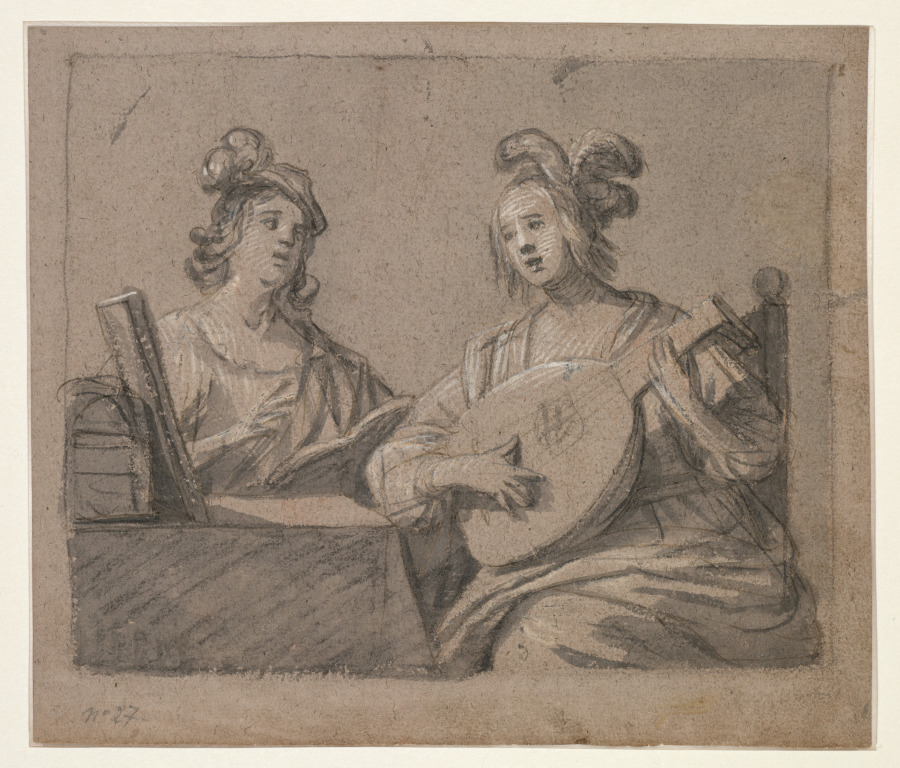
Different instruments make one scene, much like separate reports shaping a wider conversation.

Musical Scene
Musical Scene · Gerrit van Honthorst (Dutch, 1590–1656) · Cleveland Museum of Art · CC0 image.
THE WEEK FROM ABOVE · 1 MIN READ

The choices around AI are becoming more visible

Discuss

This week’s stories were less about one big technical leap and more about the choices that shape everyday use. AWS introduced a tool to help coding agents prepare AI systems for deployment , while a French analysis linked AI-exposed jobs with early changes in youth hiring . Neither story proves a wider outcome on its own.

Elsewhere, an international forum called for shared rules and cooperation , Greenpeace France focused on environmental and social costs , and Spain’s new HR rules emphasised transparency and meaningful human oversight . Taken together, these are five separate reports, not a single global trend. But they point to the same question: can useful AI systems be built with care for work, power, resources and accountability?

Five selected stories from five discovery markets.

Country names identify discovery feeds. A linked story may describe another place.

What is your take?

Ask a question, add useful context or share a different perspective. Keep the conversation respectful and grounded.
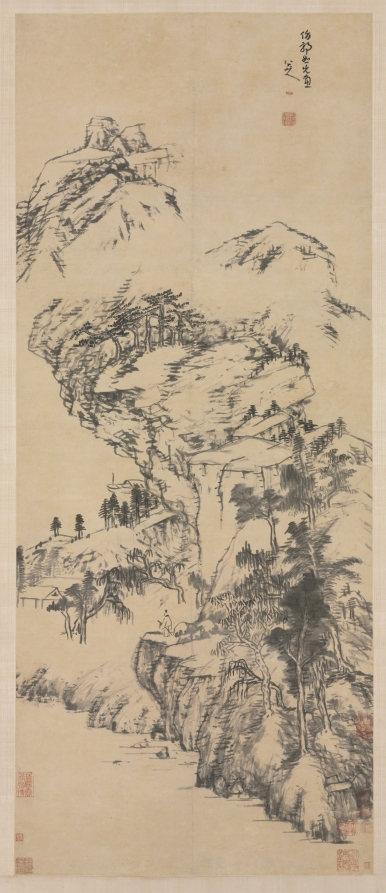
A landscape holds many connected details, like a memory that must remain useful as the view changes.

Landscape after Guo Zhongshu
Landscape after Guo Zhongshu · Bada Shanren (Chinese, 1626–1705) · Cleveland Museum of Art · CC0 image.
THE RESEARCH COMPASS · 1 MIN READ

Remembering more is not always enough

Discuss

Two studies this week look at how AI systems use the past to act in the present. One tested Ledger, a memory tool that records where objects are and how they move in first-person video . It answered some later spatial questions without replaying the video, but became less reliable when the scene changed.

The second study found that longer video history helped a robot control task only when the model had first learned to predict what might happen next . More stored information alone was not the answer. Both papers suggest that useful AI memory depends on how information is organised and trained, not simply on how much of it is kept.

Two papers from this week. Publication status and reading scope are shown with the sources.

  1. Never Look Back: Understanding Persistence in 3D Object Memory from Egocentric Videos ↗

    Authors Shravan Chaudhari, William Paul, Suchi Saria, Rama Chellappa, Homanga Bharadhwaj

    Universities and research institutions Not yet supplied in verified metadata; the Brief does not guess.

    Preprint · Summary of the paper · arXiv · Read the Brief summary

  2. Long-WAM: Scaling the Context of World-Action Models ↗

    Authors Wei Huang, Bohan Zhang, Chenzhi Liu, Isabella Liu, Shuai Yang, Weian Mao, Luozhou Wang, Yicheng Xiao, Weifeng Lin, Qixin Hu, Bryan Chu, Sifei Liu, Linxi Fan, Xiaojuan Qi, Song Han, Yukang Chen

    Universities and research institutions Not yet supplied in verified metadata; the Brief does not guess.

    Preprint · Summary of the paper · arXiv · Read the Brief summary

What is your take?

Ask a question, add useful context or share a different perspective. Keep the conversation respectful and grounded.

Pass it on

WhatsAppLinkedInFacebookBlueskyXRedditTelegramEmail

Your device can offer additional apps. Some platforms accept a pasted link rather than direct sharing.

Join the conversation

Reading is open to everyone. Sign in to like a story or leave a comment.

Your email is kept private. Signing in does not subscribe you to a newsletter.

Your privacy choices

Basic cookieless analytics and aggregate reading counts run on every device. These optional settings control private, browser-linked reading history and research use.

This permits coded page use, visible story cards, reading time and button actions in our private database. Cookieless Google Analytics runs separately. Email, comment text and search words are excluded. Product-measurement history is retained for up to 13 months.

This optional choice is separate from analytics, sign-in and notifications. Research-eligible activity is retained for up to 24 months. You can withdraw here. Past activity is not retrospectively opted in. Read the privacy notice.