AI EMPOWERMENT OBSERVATORYExplore the Observatory ↗
the brief.
Make sense of AI.
One story at a time.
Get my updates
← All weekly overviews
THE WEEK FROM ABOVE

The week in AI, 9 Nov 2026 - 15 Nov 2026

Two one-minute readings

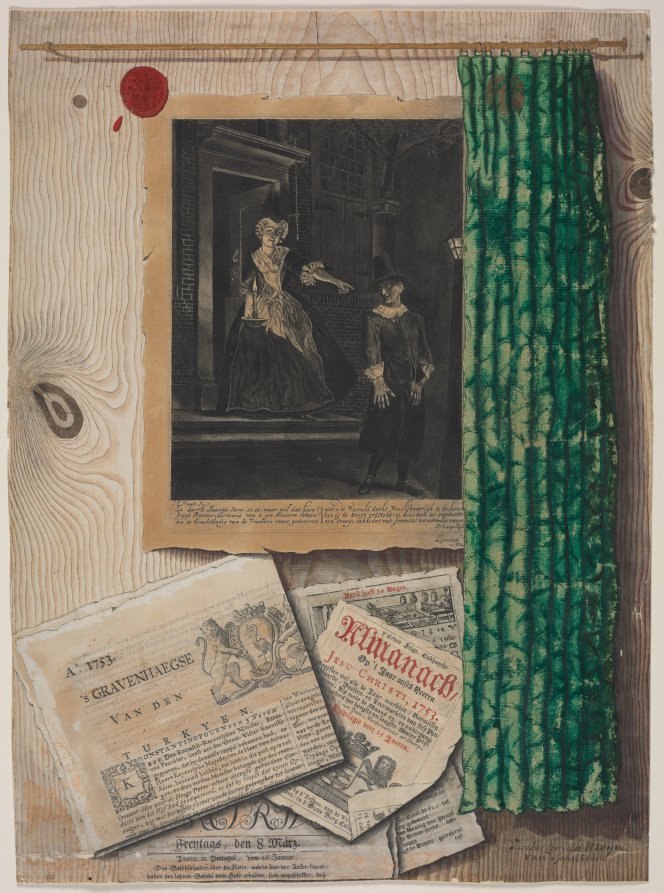
Trompe l'Oeil Still Life
Trompe l'Oeil Still Life · Jacobus Cornelis Meyer (Dutch, active 1700s) · Cleveland Museum of Art · CC0 image.
THE WEEK FROM ABOVE · 1 MIN READ

People are still shaping how AI is used

Discuss

At Penn State, researchers plan to test an AI tutor that gives engineering students hints instead of finished answers. Whether it helps them learn is still being studied. A BBC report shows AI entering older industries too, including carpet making. It can save time, but people still need to check the work.

In France, a columnist says AI can help people keep track of new information. He argues that dedicated tracking tools still matter because they let people check where an answer came from. Ontario's law commission wants clearer rules and a public list of AI used in criminal justice. Whether those ideas will be adopted is unclear.

A Fudan scholar makes the case for China to help shape global AI rules. The article presents an argument, not evidence that this approach has improved outcomes. The stories are very different. They keep coming back to a simple point. People should have room to learn, check the work, and question the rules.

Five selected stories from five discovery markets.

Country names identify discovery feeds. A linked story may describe another place.

What is your take?

Ask a question, add useful context or share a different perspective. Keep the conversation respectful and grounded.
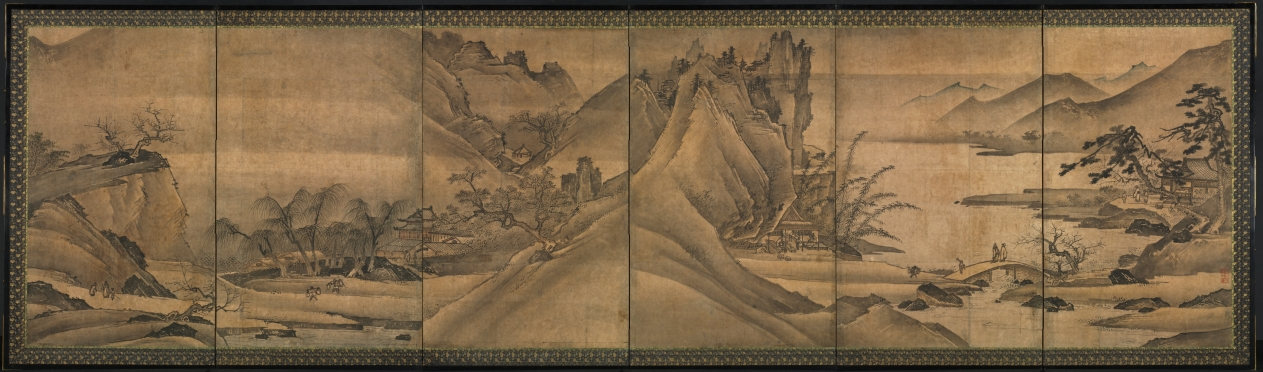
Landscape of the Four Seasons
Landscape of the Four Seasons · Yi Sumun (Korean, b. c. 1404) · Cleveland Museum of Art · CC0 image.
THE RESEARCH COMPASS · 1 MIN READ

Medical AI has to work beyond familiar images

Discuss

Two new preprints look at a practical problem in medical AI. If a system works on one set of images, will it work somewhere else? One team combined sets of chest X-rays and mammograms, even though the images were marked in different ways. Its model detected several findings better than a model trained on one set, but the gains were uneven. It was not tested in clinical care.

The second team adapted a general image model for colonoscopy, breast ultrasound and skin images. It did better on images from other institutions, but models built for each task still held their own on familiar data and sometimes drew more precise outlines.

The studies measure different jobs. One spots findings, the other draws their outlines. Their scores cannot be lumped together. Taken together, they show that the mix of images and the place of testing can change the result. Neither preprint shows better care for patients.

  1. Toward Foundation Detection Models via Example-Based Grounding in EM-DETR ↗

    Authors Sheethal Bhat, Bogdan Georgescu, Awais Mansoor, Florin C. Ghesu, Sasa Grbic, Andreas Maier

    Universities and research institutions Friedrich-Alexander-Universität, 91058, Erlangen-Nürnberg, Germany, Siemens Healthineers, 91052, Erlangen, Germany, Siemens Medical Solutions, 08540, Princeton, USA

    Preprint · Summary of the paper · arXiv · Read the Brief summary · Affiliation record ↗

  2. Medical Image Segmentation: Foundation Model Adaptation versus Task-Specific Training ↗

    Authors Emre Kutlusan, Yongmin Li

    Universities and research institutions Department of Computer Science, Brunel University of London, Uxbridge

    Preprint · Summary of the paper · arXiv · Read the Brief summary · Affiliation record ↗

What is your take?

Ask a question, add useful context or share a different perspective. Keep the conversation respectful and grounded.

Pass it on

WhatsAppLinkedInFacebookBlueskyXRedditTelegramEmail

Your device can offer additional apps. Some platforms accept a pasted link rather than direct sharing.

Join the conversation

Reading is open to everyone. Sign in to like a story or leave a comment.

Your email is kept private. Signing in does not subscribe you to a newsletter.

Your privacy choices

Basic cookieless analytics and aggregate reading counts run on every device. These optional settings control private, browser-linked reading history and research use.

This permits coded page use, visible story cards, reading time and button actions in our private database. Cookieless Google Analytics runs separately. Email, comment text and search words are excluded. Product-measurement history is retained for up to 13 months.

This optional choice is separate from analytics, sign-in and notifications. Research-eligible activity is retained for up to 24 months. You can withdraw here. Past activity is not retrospectively opted in. Read the privacy notice.